New Possibilities

Well, the combination of a bout with the Christmas flu, a trip back to Alberta for the holidays, and a general lack of reading and reflection over the past couple of weeks have conspired to make this a rather barren forum lately. We’ve just arrived back in Vancouver over the weekend and are slowly settling back into our regular routines. For me, this means writing. A lot of writing. I aim to finish my thesis by April at which time we will begin the process of discerning what comes next for us as a family.
It’s a bit of an uneasy time, to be honest. As anyone who has ever done a sustained bit of research and writing can likely attest to, moving from the potentially endless process of research to actually writing can be an intimidating and anxiety-filled proposition. And the omnipresent “what next?” question is always lurking in the background, tinging the present with a combination of dread and excitement. This year will undoubtedly bring “new” things for me and for our family and standing here, at its threshold, it can all seem a little daunting.
Like you, undoubtedly, I’ve been wished a “Happy New Year” frequently over the past week or so. I’ve often wondered what, exactly, makes January 1 so different from December 31 of the previous year. It seems that so little is actually different in a new year other than a new calendar on the wall with one different number on it. We still have our jobs, our school, our church, our kids to get out the door in the morning, our few bits of recreation time squeezed in where we can fit them, etc. By late January, things tend to look very similar (if not identical) to the previous year, our firm resolutions to the contrary notwithstanding. So what do we mean when we say “Happy New Year” to each other? Is it just a social formality? A bare collective acknowledgment that we all appear to have survived one more spin around the sun? What’s new, other than a number, about a New Year?
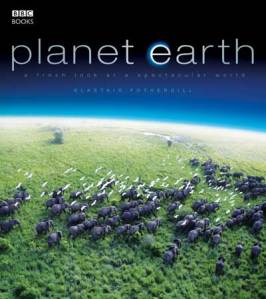 Over the holidays I spent some time watching the BBC’s wonderful new nature documentary series Planet Earth. My parents got it for Christmas and Naomi subsequently found us a steal of a deal on Planet Earth and The Blue Planet on craigslist. These DVD”s really are a magnificent window into life on our planet. They are spectacularly shot, well-narrated, and offer some truly rare glimpses into the lives of animals and their environments. We only got the set yesterday and we’ve already watched five episodes!
One thing that strikes me, however, as I watch these DVD’s is the limited nature of life on earth for non-human species. Despite the overwhelming beauty and marvelous abilities of, say, the snow leopard, the wild bactrian camel, or the hammerhead shark, their entire lives seem to be comprised of two activities: securing food and mating. The sheer struggle involved in accomplishing these two tasks for the majority of species on the planet—especially in earth’s harsher environments—is amazing, if not a little depressing from a human vantage point. These creatures’ entire existence seems to be dictated to them in advance. There are no “new” options open to, for example, the Walia ibex whose lives consist of struggling for food in the African mountains, avoiding predators, and mating. The beauty of the wildlife portrayed in Planet Earth was sometimes, at least for me, tempered by the harsh and unforgiving nature of the lives of so many of these creatures.
Perhaps bare survival is enough for non-human species. It seems doubtful that too many of these animals spend their wandering days ruminating upon the limited options available to them, or lamenting the biological “determinedness” of their lives. No, that happy task seems to be the unique province of human beings (or maybe just burned-out graduate students). At any rate, at the cusp of this New Year, I find myself feeling grateful for the apparently unique human capacity for “newness.” On one level, of course, our lives are not much different than the animals seen in Planet Earth. Our days are spent securing the resources necessary for survival, and we, too, have an instinct for passing our genes on to the next generation. Just like the animals, our bodies will wear down and, eventually, cease functioning. In many ways we are no different from the wonderful variety of species we share this planet with.
But in many ways we are, gloriously, different as well. We have the ability to introduce novelty to the cosmos—to create, to imagine and work toward better futures for ourselves and those who will follow us. Our decisions and actions, individually and collectively, can make a qualitative difference in and for this planet. The New Year’s resolution may be the most hopeless and poorly grounded of gestures, but the fact remains that we can make changes; we can decide to live better, more human and humane lives. We can do our part to improve the quality of our relationships, we can become more responsible stewards of the time and the gifts that God has given us, we can venture out and take risks, explore previously untried opportunities. In all of these endeavors failure is, of course, a real possibility but this does not detract from the uniquely human potential for newness. Human beings, like no other creatures on the planet, have a unique God-given ability to freely decide to contribute (or not) to the flourishing of all that God has made.
With this in mind, it does seem appropriate to participate in the giving and receiving of wishes for a “Happy New Year.” On the broadest possible view, this year may look very similar to the years that preceded it; however there are real possibilities for “newness” in every year. As Christians, we are committed to Jesus Christ, the Alpha and Omega, God Incarnate who, in the ultimate expression of new possibilities, entered the human condition, began its transformation, and promises to continue to “make all things new” (Rev. 21:5). From a Christian perspective, “Happy New Year” can and ought to be more than a hollow wish for a vaguely benign next 365 days; it can be a profound expression of hope and trust in the God who creates, recreates, sustains, transforms, rebukes, inspires, and enlivens those who bear his image.
Discover more from Rumblings
Subscribe to get the latest posts sent to your email.


 Rumblings
Welcome back, fair Duecks! We trust your trip back ‘home’ was warm and filled with good memories.
It’s good to know that you guys are back safe and sound. Also good to know that you’re back to reading and writing, Ryan.
Look forward to reading more of your missives. Blessings on the research!