Skip to content

Posts from the ‘Quotes’ Category

God’s Self-Justification

Last night, at a young adults group I lead, we got into a discussion about the violence of certain Old Testament texts and how we are to understand/reconcile these with the ethics of Jesus. This led to a discussion of various other evils—from personal struggles down to the most grievous of historical calamities. It was a good discussion, and I was greatly encouraged by the maturity of their views about God, evil, redemption, and hope. Read more

Sinners Anonymous

I’ve been reading Frederick Buechner again lately and, as always, am finding his way of putting things to be quite memorable.  Here’s a quote from Whistling in the Dark that serves as a good reminder about what the church is about as we head into another weekend.  This comes after a brief discussion of the structure and purpose of the Alcoholics Anonymous program: Read more

Preaching

I preached this morning—something that is still taking some getting used to.  Over the last decade or so, I’ve grown accustomed to preaching once or twice a year, at special events, or as a guest in another church.  The idea of preaching regularly (in my case, once a month or so) still feels like strange, uncharted, fearful, and exciting territory to me. Read more

The Magniloquent David Bentley Hart

I remember a friend from graduate school remarking last year about the experience of reading David Bentley Hart and the challenge to one’s vocabulary this presented.  While I have not read Hart’s magum opus (The Beauty of the Infinite), I did enjoy The Doors of the Sea and am currently making my way (slowly) through his recent collection of essays entitled In the Aftermath: Provocations and Laments.  Let’s just say that the online dictionary is getting a workout… Read more

The Ocean of Uncertainty

For those still interested, we’ll get back to the ongoing conversation between Mike Todd and myself shortly. Mike’s off at a speaking engagement in Toronto but has indicated that he plans to respond to my most recent post at some point.  This is a conversation we both feel is worth continuing.

In the meantime, I thought I would share a passage from Joseph Ratzinger that I came across recently (from Introduction to Christianity).  Here’s what he has to say about the nature of faith and doubt at this historical/cultural moment: Read more

Why The “Why?”

I came across Richard Dawkins’s latest impassioned plea for evolution this morning via Arts & Letters Daily. Dawkins’s medium this time is a book review (Jerry Coyne’s Why Evolution is True), but those familiar with the world of Dawkins will find little new here.  Mostly, it’s the same old tired re-hashing of his war against creationism and all who would resist the idea that evolutionary theory answers all questions worth asking or answering. Read more

The Epic of the Universe

One of the more beautiful quotes I’ve come across in quite some time—from Marilynne Robinson’s Gilead:

I feel sometimes as if I were a child who opens its eyes on the world once and sees amazing things it will never know any names for and then has to close its eyes again. I know this is all mere apparition compared to what awaits us, but it is only lovelier for that. There is a human beauty in it. And I can’t believe that, when we have been changed and put on incorruptibility, we will forget our fantastic condition of mortality and impermanence, the great bright dream of procreating and perishing that meant the whole world to us. In eternity this world will be Troy, I believe, and all that has passed here will be the epic of the universe, the ballad they sing in the streets. Because I don’t imagine any reality putting this one in the shade entirely, and I think piety forbids me to try.

Love

You’re going to think that this is the only book I ever read, but Buechner put it memorably again this morning…

The  love for equals is a human thing—of friend for friend, brother for brother. It is to love what is loving and lovely. The world smiles.

The love for the less fortunate is a beautiful thing—the love for those who suffer, for those who are poor, the the sick, the failures, the unlovely. This is compassion and it touches the heart of the world.

The love for the more fortunate is a rare thing—to love those who succeed where we fail, to rejoice without envy with those who rejoice, the love  of the poor for the rich, of the black man for the white man. The world is always bewildered by its saints.

And then there is love for the enemy—love for the one who does not love you but mocks, threatens, and inflicts pain. The tortured’s love for the torturer. This is God’s love.  It conquers the world.

Buechner on Theology

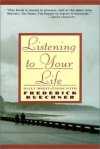
From this morning’s reading in Frederick Buechner’s Listening to Your Life:

Theology is the study of God and his ways.  For all we know, dung beetles may study man and his ways and call it humanology.  If so, we would probably be more touched and amused than irritated.  One hopes that God feels likewise.

Imagination and Explanation

We have a pair of mental operations, Imagination and Explanation, designed to work in tandem. When the gospel is given robust and healthy expression, the two work in graceful synchronicity. Explanation pins things down so that we can handle and use them—obey and teach, help and guide. Imagination opens things up so that we can grow into maturity – worship and adore, exclaim and honor, follow and trust. Explanation restricts, defines, and holds down; Imagination expands and lets loose. Explanation keeps our feet on the ground; imagination lifts our heads into the clouds. Explanation puts us in harness; Imagination catapults us into mystery. Explanation reduces life to what can be used; Imagination enlarges life into what can be adored.

Eugene Peterson Under the Unpredictable Plant:

An Easter Quote

[T]hough the historical arguments for Jesus’s bodily resurrection are truly strong, we must never suppose that they will do more than bring people to the questions faced by Thomas, Paul, and Peter, the questions of faith, hope, and love. We cannot use a supposedly objective historical epistemology as the ultimate ground for the truth of Easter. To do so would be like lighting a candle to see whether the sun had risen. What the candles of historical scholarship will do is to show that the room has been disturbed, that it doesn’t look like it did last night, and that would-be normal explanations for this won’t do. Maybe, we think after the historical arguments have done their work, maybe morning has come and the world has woken up. But to investigate whether this is so, we must take the risk and open the curtains to the rising sun. When we do so, we won’t rely on the candles anymore, not because we don’t believe in evidence and argument but because they will have been overtaken by a larger reality from which they borrow, to which they point, and in which they will find a new and larger home. All knowing is a gift from God, historical and scientific knowing no less than that of faith, hope, and love; but the greatest of these is love.

N.T. Wright, Surprised by Hope

Worth Reading

I came across two pieces of writing today well worth taking the time to have a look at. First, there’s an excellent article by Tom Ryan recently posted at The Other Journal. Here’s a little excerpt from what is an excellent challenge to the church to be honest about both the the inherent limitations (epistemological and otherwise) of being human, and of the uniquely human capacity for spiritual transformation in and through doubt: Read more

Two Ways of Waiting

Lent is a time of waiting—something we are all, in various ways and to varying degrees, familiar with. During Lent our waiting is oriented towards Good Friday and Easter Sunday, the high points of the Christian calendar. But “waiting” is a theme that extends far beyond the period of Lent. Read more

Religion as “Playing Kingdom”

A large part of my thesis work involves exploring the historical impact of religion. Does it really “poison everything” or might its influence upon history be a little more nuanced than that? Religion has, obviously, had a massive impact on the development of western culture, some of it—imagine!—even positive in nature, but it’s also proven to be a gift that is easily abused and distorted. For a whole host of reasons, “religion” is a world that seems more likely to invoke negative reactions than positive ones today. Read more

The Alphabet of Grace

I’ve slowly been acquainting myself with the work of Frederick Buechner over the last couple of weeks. This is partly because it’s something I’ve been wanting to do for a while and partly because my dad had a book of his sermons and meditations lying around and I started reading it as I desperately searched for inspiration prior to speaking at my wife’s grandfather’s funeral back in Alberta this week. My brief exposure to him thus far has proven immensely rewarding (I read a lengthy passage from A Room Called Remember at the funeral) so today I went out and picked up a couple of his books. Read more

Living Under Hope’s “Roof”

Mike, over at Waving or Drowning, has posted a thought-provoking and challenging quote from Barbara Kingsolver regarding the power of hope and the effect it ought to have on those who embrace it. Often hope—at least of the Christian variety—is presented or conceived as some vague, incorporeal utopic state which has very little, if any, connection to the lives we live on this planet. It’s for whatever comes after this life, and has very little to say about what takes place between now and then. Read more

A Two-Pronged Hope

A lot of the reading I am doing for my thesis is related to the idea of hope—how it provides an account both of the “unfinished” or “unsatisfactory” state of the natural world and the existence of human beings who expect and long for better from the world. I recently came across this quote from Nicholas Wolterstorff, from a chapter in The Future of Hope, which I feel captures these two themes well: Read more

Put Your Bibles Away?

I came across this intriguing piece at Per Crucem ad Lucem via Faith and Theology. It’s a quote from one of Danish philosopher Søren Kierkegaard’s journal entries—one in which he seems to be advocating something, well, something kind of un-Christian. Here’s a little (provocative) sample: Read more