The Monsters
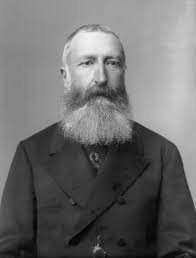
Over the last few days, my commutes have been spent listening to a series on The Rest is History called “Horror in the Congo.” It’s grim stuff, to put it mildly. In my last post I talked about how words like “Nazi” or “Hitler” are often used to refer to a special incontrovertible category of evil. After listening to this series, I wonder if we ought to use “Leopold” (as in the king of Belgium) in a similar way. The savage butchery and myriad cruel hypocrisies, not to mention naked greed and overt racism that defined his ownership of the (ironically named) Congo Free State from 1885-1908 boggles the mind. One is tempted to wonder if Leopold would have ranked up there with Hitler and Stalin in our cultural imaginations were his victims white and literate. But I digress.
Tom Holland and Dominic Sandbrook’s telling of even appalling stories is always engaging on multiple levels. And, like that professor that you were always trying to get off his notes and on to an opinionated rabbit trail, some of the most interesting parts of these episodes is when they move from the telling of history to the speculating on what it might mean. Today, for example, after a particularly chilling section that explained how the outside world would be told that the Belgians were running orphanages for children with no parents, all the while neglecting to mention that these “orphans” were the surviving children of people who they had killed or enslaved, the hosts had the following exchange.
Holland: “But going out and killing the parents of… Boys who you then enslave. I mean, that’s a kind of, I mean, dare one say evil?”
Sandbrook: “You’re speaking as somebody who’s unaware of history.”
Holland goes on to ask the question of where the voices of conscience might have been in all this and how they weren’t more prominent. Sandbrook responds thus:
I don’t think that’s a very hard question to answer because I think human beings often behave like that in history. And because I have a very bleak view of human nature.
I, too, have been accused of having a rather bleak view of human nature. And to this, I must confess that I am guilty as charged. One could look at the record of history, certainly. One could also look (honestly) within one’s own heart and mind. I’ve never really understood people who say that human beings are “basically good”—as if evil is nothing more than a curious occasional interruption into a mostly placid and benevolent human nature. I often wonder if they have observed a human being in the wild. Or if they have been entirely honest with themselves. Even if our moral compasses retain the capacity to be repulsed by the grotesque evils of the Leopolds of the world, our species is capable of almost limitless selfishness and stupidity, of extraordinary self-deception and casual neglect of the things that ought to matter most.
I’ve remarked here often that I think one of Christianity’s great gifts to the world is an honest anthropology. Of all God’s creatures, we alone have the capacity to soar both to the highest heavens of beauty and goodness as well as to plunge to the fieriest depths of hellishness. Given the circumstances, we are all capable of both. Christianity pays us the compliment of telling us the truth and demanding that we handle it. It gives us the categories of confession and absolution, of atonement and redemption. It will not leave us with the pleasant illusion that we are “basically good.” Instead, it tells us that staggering goodness and terrifying evil lie latent within each one of us, and that we have the moral responsibility to pursue the one and put the other to death.
We don’t always like this, of course. I certainly don’t. I would prefer to locate myself on the side of the angels and then gape in self-righteous horror at “those people” on the side of the monsters. But history (and theology, and psychology) teaches me to pump the brakes on separating myself too quickly from the monsters of our world.
The wisest voices of history remind us that things are rarely so simple. Alexander Solzhenitsyn has perhaps one of the more well-known quotes on these matters. This is from The Gulag Archipelago:
If only it were all so simple! If only there were evil people somewhere insidiously committing evil deeds, and it were necessary only to separate them from the rest of us and destroy them. But the line dividing good and evil cuts through the heart of every human being. And who is willing to destroy a piece of his own heart?
During the life of any heart this line keeps changing place; sometimes it is squeezed one way by exuberant evil and sometimes it shifts to allow enough space for good to flourish. One and the same human being is, at various ages, under various circumstances, a totally different human being. At times he is close to being a devil, at times to sainthood. But his name doesn’t change, and to that name we ascribe the whole lot, good and evil.
The Apostle Paul once described himself as “the worst of sinners” (1 Tim. 1:15). Empirically, this was not true. He definitely had his terrible moments, but human history before and after him has provided numerous examples of objectively worse sinners (i.e., King Leopold of Belgium). But perhaps Paul was thinking less about the body count than about maintaining a moral disposition appropriate to our condition. We are surely capable of anything. Reminding ourselves of this might just help us avoid our worst and pursue our best.
Discover more from Rumblings
Subscribe to get the latest posts sent to your email.


 Rumblings
Yes.
I didn’t mean to say Yes twice. Once is enough. 🙂 Please delete one. Thanks. Dora
…”Where your treasure is, there will your heart be also”…
What are we after? What is our priority? If the end game is simply material, then people become nothing more than a means to an end. Useful if we prosper, disposable when we don’t.
Often we struggle to rest in the Spirit. To meditate in the presence of God. To just be with Him. To feel the certainty, no matter what happens next, that our love of Him and trust in Him will lead us home, no matter how harrowing the journey gets.
The next best thing is to offer the fullness of your love to another or others. Live like Him and live to serve.
It’s hard to feel true love from another person, though they can earn your trust and that is no small thing. True love is more likely to be felt when you know that you have given the very best of yourself in service of another 1and you encounter the Saint within yourself, the Saint you could be.
It occurs to me that Canadians might be better served by this post if you swapped out King Leopold and the people of the Congo for John A. MacDonald and our indigenous peoples.
Thank you again for thinking in print.