Rage Against the Machine
It’s a shame we have to die, my dear. No one’s getting out of here alive.
— Foo Fighters, DOA
I spent part of yesterday watching the “Gentlemen’s Final” at Wimbledon. Like many things about this old tournament, the vocabulary speaks to a bygone age. Who uses words like “gentlemen” anymore? Although this year’s finalists refreshingly seem to actually fit the term. Jannik Sinner and Carlos Alcaraz seem to be something of a rarity in professional sports in that they are genuinely decent young men in addition to being spectacular tennis players. It was a good match, and it was nice to see Sinner prevail after a crushing loss to Alcaraz in a five-hour marathon a month or so in the French Open final.
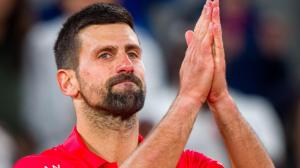
Sinner and Alcaraz are rapidly pulling away from the rest of the field in men’s gentlemen’s tennis. They are the best two players on the planet right now by some distance. One of the guys they are leaving behind is the legend Novak Djokovic. Indeed, Djokovic was little more than a speed bump for Sinner in the Wimbledon semifinal on Friday. It was fascinating to read some of Djokovic’s comments after a match in which he was clearly struggling to keep up with the young phenom who is fifteen years his junior:
I don’t want to talk, in details, about my injury and just whine about not managing to play my best. I want to congratulate Jannik for another great performance. That’s it. He’s in the finals. He was too strong.
“I do feel disappointed that I just wasn’t able to move as well as I thought or hoped that I would.”
“It’s just age, the wear and tear of the body. As much as I’m taking care of it, the reality hits me right now, last year and a half, like never before, to be honest…
The honesty and candour were refreshing, particularly when pro athletes are regularly coached on the subtle art of giving an interview where they say precisely nothing that is remotely interesting. Djokovic wasn’t done. He continued to reflect on the challenges of getting older:
The longer the tournament goes, the worse the condition gets,” Djokovic said. “I reach the final stages, I reach the semis of every Slam this year, but I have to play Sinner or Alcaraz. These guys are fit, young, sharp. I feel like I’m going into the match with the tank half empty….
And then the part that really struck me.
“I don’t know what I can do differently, because the amount of hours that I spend on a daily basis to take care of myself, I’d like to challenge everyone who is out there on the tour to see if anybody takes cares of themselves more than me,” Djokovic said. “And I, unfortunately, don’t get rewarded for that right now, with injuries at the later stages of slams.
It’s almost as if you’re listening in on Djokovic bumping up against the constraints of the human condition in real time! He’s not overstating things when it comes to how hard he works. Djokovic’s devotion to fitness is legendary. The man is fanatical about his diet and exercise. He treats his body like a machine, carefully managing every input, famously refusing the Covid-19 vaccines because of an unwillingness to put anything foreign into his body. And his body has performed with machine-like efficiency for the better part of two decades. He has won more than anyone else in tennis history. At times in the last decade or so, it wasn’t even fun watching tournaments, so obvious was the conclusion that Djokovic would win.
But even machine-like bodies get older. And 38-year-old machines are not the same as 23-year-old machines. This is just a fact. And it’s one Djokovic is clearly struggling to accept. I work so hard! I work harder than anyone else! I should be rewarded for my hard work. He’s feeling betrayed by a body that he seems to think should be immune from the ravages of time, as if he should be able to forestall mortality with sheer determination. It’s almost as if he’s raging against the unfairness of a world where you can’t cheat death with effort.
I turned fifty a few weeks ago. Some peers have told me that they found fifty to be a tougher threshold to cross than forty. For me, I can’t say one felt much different than the other. But of course, one does notice the body responding differently as the odometer ticks upward. The proverbial aches and pains, the injuries that take a bit longer to heal or which you never fully recover from, etc. In other words, the stuff you would expect from getting older. You do what you can, you try to exercise a bit (I’ve attempted, perhaps unwisely, to learn how to play tennis in the last five years), maybe watch what and how much you eat a bit more, but my fifty-year-old body simply does not do what my twenty-five-year-old body did. This is a fact of life and one that I cannot change, even if I were to attempt Novak Djokovic-level discipline (a temptation I have thus far heroically managed to resist in my life 😉 ).
It’s not exactly a pleasant thing to contemplate one’s mortality, I know. We’d prefer to think that with enough effort, whether exercise or collagen to get rid of the wrinkles, or the right diet hacks or plastic surgeries or Instagram filters or water consumption, that we’ll be the ones to cheat the constraints of mortality. Or at least we can buffer ourselves from it as long as possible. But wisdom demands facing reality honestly. As Psalm 90, puts it: “Teach us to number our days that we may get a heart of wisdom.” Living well involves aging well and ultimately dying well. Numbering our days, at the very least, entails remembering that our days have a number. As the Foo Fighters so eloquently put it in the quote above, “No one’s getting out of here alive.”
Novak Djokovic may be right about the unfairness of it all. I would prefer a world where effort received its commensurate rewards. But as we know, some people take great care of themselves and still die relatively young, while others abuse their bodies for long decades and make it into their eighties and nineties. It’s not fair. But this is life. And we must face it as it is. Perhaps we might even use it to remind ourselves that we are human beings, not machines. And to give thanks (or consider for the first time) that to be human is to be summoned to a hope beyond what we can ever earn or secure with our own effort.
Discover more from Rumblings
Subscribe to get the latest posts sent to your email.


 Rumblings
I suggest that Mr Djokovic read a book or subscribe to a place like Harvard Health and learn what physically happens to our bodies as we age. There is no possible way his body can perform like it did in younger years, and his performed so remarkably well for so long.
Sunday’s Tour de France Stage 9 was mainly flat for the 174 km but average speed of 50.02 km/hr. Considering they ride 200 km/day on most days, it’s amazing how they can recover by the next day – age gets discussed regularly. When we understand how our bodies change as we age, our expectations of reward will likely change also.
It’s refreshing to see the high level of respect these athletes have for each other!
Yes, understanding and acceptance are part of the journey. And yes, it was very refreshing to see the high level of respect!
I’m 62 now. For the last year I have struggled with problems in my left knee. No surgery (yet), but physical therapy, a heating pad, and exercise. At times during the winter I needed to use a cane, for the first time in my life. Apart from physical issues, the hardest part of using a cane was being seen using a cane, as well as knowing that my body is slowly deteriorating, as bodies do. Scripture promises us new bodies, but in the meantime we have the ones we have. I still keep my cane in the back of the car in case it is needed. No doubt, someday I’ll need more than a cane.
I’m sorry to hear this, Chris. I’ve struggled with knee issues over the last eight years or so, too, and it’s obviously not fun. I can well imagine what you say about the hardest part being seen using the cane. Blessings to you as you continue to negotiate the challenges of living well with “the bodies we have,” anticipating the newness that is to come.
Well said/written, Ryan. Thanks for the post.
This. I’ve also just stepped into my 50’s. Not much changed physically – well – except when I sit too long, I need to stand for a moment to get my legs working. What’s that about? I’ve been doing a lot of reflecting about my life, my family and my purpose. I surround myself with good people and I’ve thrown in a few contractions to keep me on my toes.
But mortality? Yeah, my time is closer now than it was before, I suppose. Now more than ever I find I’m living life like I’m letting go. Letting go of hurts, letting go of drama – heck I’m even letting go of pumping gas on the dollar! Who cares if I pump $50.12?
I find it’s time to focus on life and stay in my lane. Maybe I’ll pass tomorrow? Maybe I’ll pass in 5 years? Maybe my good friend who always seems to be in Rehab for yet another addiction, will outlive me and deliver my eulogy.
What I do know is I’ll continue to make good choices – one after the other and not worry about fair square. I wish I would have lived like this earlier in life.
I guess I’m only human too.
*contrarians not contractions. Oops!
These sound like some good and important reflections, Elizabeth! Letting go is such crucial work (and so difficult for so many). Thanks for sharing this.
If the Spirit strengthens as the body weakens, then it is a trade off we should all be making joyfully.