On Mental and Spiritual Health
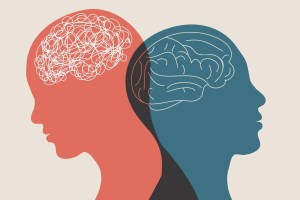
For at least the last few decades, I have regularly encountered a shift in how Christians employ the categories of mental health and spiritual health. I can’t remember precisely when this shift started, sometime in my twenties or thirties probably. Often someone would share some story of a clumsy pastoral interaction where they came to the church with a problem—say trouble in a marriage or a difficult child or abuse of some kind or some traumatic experience that was proving debilitating—and the pastor left the impression that all you really had to do was pray the problem away.
This was clearly, according to the storyteller, a confusion of categories. Pastors ought to stay in their lane and deal with “spiritual” things. Leave these other things to the trained professionals, the counsellors, therapists, psychologists, etc. Pastors, if they were decent ones anyway, should refer, refer, refer. God save us all from the naïve or hubristic pastor who imagines that they can just show up to complex psychosocial realities naively armed with nothing more than their bibles and bunch of vaguely spiritual bromides.
There is something to be said for this, obviously. Many pastors are clumsy (or worse) when it comes to complex psychosocial realities. Often, referring people to a good therapist is precisely the right thing to do (I have done it often). It is important to recognize one’s limitations and to give thanks for the many resources God has put at our disposal when it comes to trying to help people who are going through hard things. Nothing in what follows should be taken as me saying that I am against accessing mental health supports and clinical treatment where appropriate.
But given the proliferation of therapy speak recently, I am starting to wonder if the pendulum has swung too far (as pendulums tend to do). It worries me how easily and naturally people (especially young people) default to mental health categories as identity markers (at times, weirdly, almost as status symbols). It worries me to observe how negative emotions are so easily and naturally pathologized and medicalized. It worries me to see how resilience is implicitly discouraged, and fragility is unintentionally incentivized.
And of course there is the big question looming over everything: is this shift toward reinterpreting everything (or at least many things) in our lives through mental health categories helping or hurting us? Is it leading to human flourishing or detracting from it?
A recent article by Ian Harber highlights concerns that I have heard from burned out parents and pastors and teachers and coaches and many others over at least the last decade:
In light of all of this, the first question we have to ask is: Is this shift making us better? The rising consensus from mental health professionals seems to be a resounding “No.” [An]… article in The Atlantic cites a study of more than 8,000 students in the U.K. who participated in a mindfulness program only to find that their anxiety became worse. Because therapeutic culture constantly turns us inward, we become overly aware of every uncomfortable situation we are in and the negative emotions we feel.
Not only that, but it trains us to believe that because we are experiencing something uncomfortable or negative, there must be something wrong—either with us or with them. Not only have we begun to diagnose ourselves, but we’ve also started diagnosing others. Armed with only what we’ve seen on a handful of TikTok videos or a graphic from a therapeutic influencer’s Instagram—without any training, experience, credentials, or professional understanding—we label other people with therapeutic labels and mental disorders because they loosely match a description of something we heard someone say one time. Either we’re anxious, or they’re a narcissist. Either we’re OCD, or they’re shaming us. Either way, it creates the perception of being a perpetual victim of either your own psyche or other people’s neuroses.
I see this all over the place in our culture and in the church. Increasingly, we are being given an internal architecture that employs a very different set of categories than human beings once used to understand themselves and their experiences.
Instead of understanding ourselves as image bearers of a loving God, fallen and broken but also still deeply cherished and utterly unique in all of creation, we see ourselves as victims of innumerable traumas, incapable of coping with the demands of the world.
Instead of seeing our lives as gifts to be stewarded and vehicles of redemption, we see ourselves as the products of genetic and social forces beyond our control which we are almost powerless to resist.
Instead of seeing ourselves as morally responsible, at least on some level, for our behaviour and how it affects others, we increasingly seek to locate the blame somewhere other than our own choices.
Instead of assuming strength—or at least believing that human beings are capable of hard things—we assume weakness.
Instead of believing that our identity and value is secure by virtue of being children of God, we believe that we must create and curate our own.
Instead of seeking to align our lives with an objective meaning which is external to us and which precedes us, we try to create our own meaning and purpose from the scraps and fragments of smaller stories, usually involving us at the centre.
All of this strikes me as profoundly unhelpful, regressive, and unworthy of who we were created to be as human beings. And, again, it doesn’t seem to be working. We’re not becoming wonderfully healthy, well-adjusted human beings. The evidence (empirical or anecdotal) simply doesn’t point in this direction.
Again, none of the preceding should be taken to mean that it is not legitimate or necessary at times to seek help from therapists, psychologists, psychiatrists, etc. (and, hopefully, to stop seeing them once we are in a better place). We should use all the gifts God has given to help human beings flourish and grow.
But we should also mind the pendulum swings.
To return to where I began, sometimes the pastor is correct to refer to the therapist. But sometimes, the pastor should resist this temptation. Sometimes, what a person most needs is to recover a better, more hopeful view of who they are, what they have been created for, and what is possible. Sometimes they need someone to listen to them and to pray for them. Sometimes, the last thing they need is to tunnel ever deeper into their psyche. Sometimes they need to be directed outside of themselves, toward love of God and neighbour. Sometimes they need a better story than the one they have been told about what it means to be a human being. Sometimes, the problem isn’t mental health but spiritual health.
Discover more from Rumblings
Subscribe to get the latest posts sent to your email.


 Rumblings
An interesting viewpoint. At least, I think, pastors, or parents for that matter, should know or be taught to recognize when a problem exceeds their skill set. I’ve witnessed the train wreck when a pastor and congregation have chosen to deal with a charge of sexual interference in-house.
Yes, as I said in the post: