Give Praise
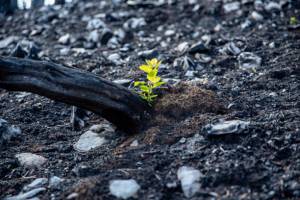
One of the last chapters in Martin Shaw’s Liturgies of the Wild is called “On Praise Making.” In many ways, the book is about how we become spiritually mature human beings, and it’s interesting to me where he situates the ability and willingness to give praise. Near the end. In other words, a spiritually mature person can praise in an unguarded way, without always factoring in how the elevation of others reflects on them, their own deficiencies, their own lack, all the things they wish they could be or do or experience. Genuine praise sets the self aside and focuses on the other. It’s not a calculation, not a downpayment on an expected future return, not a performance, not something to be doled out cautiously. It is, in the end, an expression of love.
Shaw puts it like this:
Praise is an extraordinary discipline in a world of me-first. Especially when it’s nothing a quality that you yourself would love to have. Having to take a breath, a humbling before you give praise is an even deeper expression of its gifting. Praise can be a decision as much as an instinct. It can take practice. It’s not naïve or simplistic to give praise—it reveals a largeness of character. It shows that you’re a grown-up, not trafficking in sarcasm or nasty little digs…
Praise carries news of the universe with it, procures little green shoots from the largest of ash piles. It’s a radical art; it changes lives and it’s absolutely free. Inability to praise is a sign that you’re not quite grown.
I shudder to think of how often, over the years, I have “trafficked in sarcasm or nastily little digs.” Almost always, this is a self-protective move—to show that I am clever or that I see reality clearly (not as some dewy-eyed idealist) or whatever. Even less impressively, sometimes I withhold praise because other people seem to be getting more of the world’s goodies than I am at the moment. Their careers are advancing more obviously than mine, they have more exotic holidays, their kids are clicking through the milestones, they don’t have the same kind of (heroic) challenges that I do, etc. And so I retreat behind these pathetic little shields that shield me from precisely nothing. I close my fists around praise and deprive others (and myself) of all that it could be and do in the world.
But when we praise, we open ourselves up to something new and beautiful. Again, Shaw:
[O]ver time, something of a miracle can happen… Reality softens, you notice far more of the good in people and circumstance, you may even notice a little of that good in yourself. Praise can cause that nasty little inner critic that continually berates you as a fraud to lose its clawlike grip on your shoulder. Generosity is infectious; it changes everything around you if you are really paying attention…
Be careful with criticism, maybe take a minute before you let fly. Where in you is it coming from? To critique can be vital, absolutely valid—Christ did it constantly—but as mere mortals we often attack simply as an expression of various unattended wounds. In our assaults, we grow smaller and smaller, the light dims, and our affection is petty and conditional.
A spiritually mature person gives praise. They also attend to their wounds. But they do so without making their wounds everything and imposing them on others in such a way as to suck the joy out of every room. They do it with honesty, with compassion, with an openness to newness, with an awareness that, to borrow the words of Nick Cave, there’s a “redemptive electricity” that never ceases to surge through God’s world, and with a genuine desire to celebrate the goodness of God wherever it may be found (even, or especially, when it’s found in the stories of others).
To borrow the words of St. Paul, they “rejoice with those who rejoice and weep with those who weep” (Romans 12:15). I used to read these words as a kind of bland commendation to sympathize with others. I now see them as one of the highest callings of our faith, one of the ways we, to quote Shaw, “get made” and “become a real human being.” They represent an intentional setting aside of the self, one of the hardest things we will ever do. And one of the ways those little green shoots emerge out of the ash pile.
Discover more from Rumblings
Subscribe to get the latest posts sent to your email.


My instinct is to say that praise should be reserved for God. Perfection deserves praise, imperfection not so much. I’m not sure it benefits people to praise them. No one should be encouraged to think more of themselves then is true.
Personally speaking, I prefer gratitude to praise. Gratitude seems more sincere, touches my heart, heals many a wound and is less likely to inflate my ego.
I love this line, Ryan – “A spiritually mature person gives praise. They also attend to their wounds. But they do so without making their wounds everything and imposing them on others in such a way as to suck the joy out of every room.” I feel what truly matters is that we give praise naturally and genuinely, when we truly feel moved to express appreciation. Recognizing others, even imperfectly, can be uplifting and motivating. The key is to trust our instincts and be honest in our expressions.
Speaking of praise, I believe there is some new U2 music to review.
I’m waiting. 😃
He’s telling stories in Canada soon, Ryan!