Skip to content

Posts from the ‘Books’ Category

Wilderness

One of the texts that I spent some time on during last Sunday’s sermon was Isaiah 40:1-11 which speaks of good things coming from the wilderness. Words of comfort for beleaguered exiles, words of hope in the God who raises the valleys and brings low the mountains, words of good tidings to be proclaimed from the mountaintops, that the Lord comes to his people with strength and with compassion. Good words, from the wilderness. Read more

It Is To You My Heart Calls

One of my trusted companions throughout each Advent Season over the last few years has been a little reader put together by the folks at Regent College called The Candle and the Crown. Each day there are two Scripture readings and short reflections by Regent faculty, alumni, and others—one for the morning and one for the evening.

Among the Scripture readings this week was the twenty-seventh Psalm, which has long been one of my favourite psalms. The combination of joyful, expectant hope, longing, and raw honesty has made this psalm a frequent destination for me. As with so many of the Psalms (and Scripture in general), I find that these ancient words narrate and interpret my own experience so many years later. Read more

The Path to Peace

Steven Pinker has a new book out called The Better Angels of Our Nature and is currently doing the rounds to promote it.  I heard part of an interview with Mr. Pinker on CBC’s The Current yesterday, and today read an article on the book from The New York Times.  I’ve not yet read Pinker’s (apparently massive!) book, but as I understand it the basic thesis is that, contrary to what one might expect to hear from an evolutionary psychologist committed to the a view of the world that sees natural selection as the driving force behind human history, we are becoming more peaceful as a species. Read more

Reading and the Encroaching Buzz

Last night, I finished a book. Not a particularly momentous occasion, you might think—and certainly not worth celebrating online. But it was significant to me for the simple reason that  I haven’t been doing much of this lately. Finishing books, that is. I’m very good at starting books—I must have fifteen or so on the go at any given moment—but lately I’ve noticed that making it to the last page is an increasingly rare occurrence. Read more

Meet in the Middle

In light of my comments in a previous post about the subtle differences in emphasis between the two streams of the Mennonite world I am becoming increasingly familiar with, I was intrigued to come across a passage by Ron Rolheiser in my reading this week that addresses the importance of both the private (i.e., individual piety) and the public (i.e., concern for justice) dimensions of Christian spirituality. Read more

What We Do With Our Unrest

In conversations about religion in Canada these days, one frequently comes across some variation of the phrase, “I’m spiritual, but not religious.” The implication often seems to be that “spirituality” represents openness, inclusivity, tolerance, and a host of other virtues, while “religion” is associated with the nasty dogmatism and rigid moralism of institutional church structures. Spirituality = good; religion = bad.  That seems to about cover it, in many estimations. Read more

In Search of Worship

One of the highlights of any trip back to Regent College is the opportunity to snoop around their excellent bookstore. It’s always difficult to avoid spending much more money than I have, but I often emerge with a handful of good books to keep me going for a while. This year, one of titles I came away with was Orthodox theologian Alexander Schmemann’s For the Life of the World. Read more

The Servant God

The conversation taking place on my previous post—specifically the comment referring to open theism—has got me thinking about some of my writing and reflection I did on the topic during my university days. I spent an entire undergraduate thesis under the supervision of a self-described “atheistic Jew who is angry with God” advocating open theism as a response to the problem of evil. Read more

How God Gets What God Wants

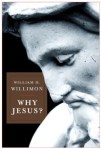
An interesting quote for Good Friday, from William Willimon’s Why Jesus?:

[T]he cross is not what God demands of Jesus for our sin but rather what Jesus got for bringing the love of God so close to sinners like us.  This is all validated by God raising this crucified victim from the dead, not by dramatically rescuing Jesus’ failed messianic project, nor certifying that Jesus had, at last, paid the divine price for our sin.  Rather, it showed the world who God really is and how God gets what God wants.

Witness to Surprise

My previous post was, perhaps, a bit long on what I don’t (or didn’t) like about the word “pastor” and short on what is good and positive and substantive about the vocation.  Chalk it up to my incorrigible “glass-half-empty” perspective :).  Or something like that.  At any rate, my estimation of the pastoral vocation has been on a long and steady trajectory of rehabilitation, not least due to my encountering of inspiring examples of what it can and should be along the way.   One of them, Frederick Buechner, captures much of what I was trying to convey in my post—both the potential pitfalls inherent to the position as well as the wonderful opportunities and privileges that can be part of a life with and for God and others—in this passage from Telling Secrets: Read more

Death is an Affront

Today was an interesting day, characterized by a number of rewarding yet demanding conversations with passionate and intelligent people wrestling with some of the deepest and most painful questions of life.  Among these questions, was the question of death—how we are to understand it, certainly, but, more importantly, how we are to live with and despite it, especially when faced with the loss of someone close to us.  Words often seem like meagre tools indeed when faced with the monstrosity of death, but as I sit in a quiet house ushering another day out the door, reflecting upon what it held, and snooping around in some old books, these words about death from Peter Berger hit home: Read more

Silence

I couldn’t help but grimace as I read the headline from Douglas Todd’s recent article in the Vancouver Sun (“Evangelicals Mostly Alone in Believing God Punishes with Earthquakes“).  It highlighted, once again, the lengths we will go to to find (or manufacture) moral meaning in times of chaos and suffering. Combined with news of some painful things happening in the lives of various people in the various domains of my life and work, I have been thinking a lot about the silence of God these days, and how we are to live and think and speak about God as people of faith in a broken world. Read more

Good Question

Well, I finished Rob Bell’s Love Wins on an airplane this weekend. First reaction? It’s not bad. My suspicions that the storm this book has generated has a lot more to do with how it was marketed and the frantic and reactionary nature of the world of social media than with the content of the book itself were certainly justified. I may write more about Love Wins in the next little while. Or I may not. We’ll see. My sense is that the internet is getting tired of this whole thing. Read more

The Work of the Church

I spent a bit of time this morning listening to an interesting little interview with Eugene Peterson over at NPR’s “Books” page. The interview accompanies a short excerpt from Peterson’s new book, The Pastor: A Memoira book that is in the mail, and that I am very much looking forward to. Unfortunately, Eugene Peterson wasn’t on campus much during the three years I spent at Regent College so I did not have the privilege of taking a course with him, but his books have been a lifeline to me over the course of my first three years in pastoral ministry (I’m thinking specifically of Under the Unpredictable Plant, Working the Angles, and Five Smooth Stones for Pastoral Work). Peterson’s consistent refusal to allow the pastoral vocation to be accommodated to the logic and demands of the marketplace (I believe “religious shopkeepers” is the term he uses) is an inspiration and a challenge. Read more

Fear Wins?

Today was an odd day in the blogosphere. It seemed like every third post that came through the reader had something to say, or linked to someone else who had something to say, about Rob Bell’s forthcoming book Love Wins, and whether or not Bell has placed himself beyond the pale by declaring himself to be a universalist (you can start here, if you like, and follow the link trails). Like nearly everyone else offering commentary on this book, I have not read it. The main reason for this is because the book hasn’t been released yet, which makes the hysteria around what it might say even more grimly amusing. It’s interesting to observe how threatening some people find even the possibility that Bell might not believe in a very specific conception of hell. Read more

Evil Will Have Nothing to Say

Two of my projects this week have been working on an article on suffering and the sovereignty of God, and preparing a class for this Sunday on the varieties of approaches to the problem of evil. Consequently, I’ve been raiding the bookshelf over the last few weeks in order to reacquaint myself with some of the authors and ideas that I leaned on more heavily during my university and grad school days. Read more

Rich Toward God

Our text for the sermon in church this morning was Luke 12:13-21 (“The Parable of the Rich Fool”). One of the verses in this passage has me thinking this evening. In verse 21, after condemning as folly a life of hoarding possessions, Jesus offers a typically elusive phrase: “This is how it will be with whoever stores up things for themselves but is not rich toward God.” So what does it mean to be “rich toward God?” Read more

The God We Have

I am in the midst of a fairly busy stretch of sermon preparation, worship scheduling, article writing, class planning, etc, etc, not to mention the ordinary demands of life with a young family, so apologies for the lack of substantive and/or original posting around here over the last little while. I hope to rectify this deficiency shortly, but in the meantime, here’s another arresting quote from William Willimon’s Why Jesus?: Read more