Skip to content

Posts from the ‘Theology’ Category

The Idols We Worship

I hardly ever listen to the radio anymore, at least not to top-40 type stuff. Aside from the deficiencies of the music on offer, I can’t stand the mindless advertising, the idiotic banter between the morning hosts, and… well, it’s mostly the advertising. Today, however, as we were having lunch with the kids at a local eating establishment, I couldn’t avoid the radio, and I happened to hear something very peculiar called the “Daily Hollywood Gossip Report.” At first, I simply consigned this to the “stupid things you hear on the radio” category of my brain, and dismissed it quickly. But I found myself returning to it as the day went on. Read more

What We Deserve

The last week or so I have spent a good deal of time on ferries and in buses, trains, and vehicles as I bounce around from convocation ceremonies to retreats and conferences in and around Vancouver. As such, I have had less time than usual to do any writing (in case you’re wondering about the lack of recent posts).

This week I’m at Regent College for a pastors conference. One of the interesting things about many events at Regent is the diversity (ethnic and theological!) of those present. Today I had two interesting conversations, one with an American and one with an Indonesian. In both cases, I found the presuppositions about God and human beings very strange and a bit unsettling. Read more

Atonement and the Evils We Face

I’ve been a part of a couple of interesting conversations over the last few days. One was with a bunch of guys on a work retreat and had to do with the nature of God’s knowledge and how it relates to the problem of evil. The second had to do with how to make sense of a tragic situation and how mental illness does/does not factor into the destructive decisions and actions of those close to us. One conversation was pretty detached and abstract, the other intensely personal, but both reminded me of the centrality of theodicy in how we look at the world and of the importance of getting clear exactly how we think that Jesus addresses the deepest questions we have. Read more

Playing God

Yesterday’s National Post had an interesting article about a 71 year-old, perfectly healthy Vancouver woman who is seeking the right to die alongside her ill husband. This isn’t legal in Canada, but there is an organization in Switzerland (Dignitas) that is apparently willing and able to administer lethal doses of drugs—after counseling, of course—to those looking to check out of this life. Ludwig Minelli, director of Dignitas, says that although assisted suicide was originally advocated as an escape only for the very ill, “it should be an option for anyone who feels they can no longer go on, and has the mental capacity to make the decision.” Read more

The Comb-Over and the Kingdom—Redux

Just over two years ago, while studying at Regent College in Vancouver, I posted the following tongue-in-cheek reflection on the theological significance of the comb-over.  My stats counter tells me that I am closing in on 1000 views for this post making it quite easily the most viewed post in the short history of this blog (and providing me with an unsolicited dose of humility—I’d like to think I’ve posted on more important and interesting topics, but the numbers don’t lie…). Of course it’s possible that these lofty (for me) stats are due, in large part, to the fact that the post seems to pop up pretty high on the list when “combover” is entered into a search engine, but I prefer to interpret them as unambiguous evidence of my obvious wit and theological dexterity.

So, in honour of approaching the millennium mark for this post, and because it’s April Fool’s Day (and what could be more foolish than attempting to stretch a few wispy strands of hair across an otherwise barren skull… perhaps writing about it?!), I thought I would re-post a lightly edited version of the original.  If nothing else, it provides a reminder that the theological graduate student is, indeed, a very peculiar animal. Read more

Problems with the Problem: What’s the Atonement For?

Part of last weekend was spent at a conference at ACTS Seminaries dealing with the nature of the atonement. Among the questions under discussion were: How is it that the work of Jesus actually saves? What does Jesus save us from? For what purpose does Jesus save us? These seemed like very appropriate questions to consider as we move toward the Easter season and beyond. Read more

What Life Asks of Us

I just got back from a very enjoyable trip to Saskatchewan (I heard it was nice this time of year) to visit my brother and his family and play some hockey. Among other things, it gave me the opportunity to do something that I’ve never had the chance to do before: observe my brother in a classroom context. I sat in on his Intro to Theology class Monday morning and left with much to think about. Read more

Musings on Universalism

From the category of “interesting pastoral experiences” comes the following email I received last week:

Hi,

I am seeking a universalist belief church where people believe that Jesus came to earth to tell people about universal salvation, not eternal damnation? Is this such a church? I have gone to yours before, but never did understand what the belief system is at this church?

Thank you for your time—God bless,

———— Read more

Buechner on Theology

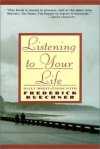
From this morning’s reading in Frederick Buechner’s Listening to Your Life:

Theology is the study of God and his ways.  For all we know, dung beetles may study man and his ways and call it humanology.  If so, we would probably be more touched and amused than irritated.  One hopes that God feels likewise.

Truth, Fear, and Fairy Tales

Three or so odd months after finishing my thesis, I still find myself perking up when I come across some headline or article discussing the latest bit of wisdom from the pen of Richard Dawkins. Apparently the good professor is now directing his attention toward children’s fairy tales and myths, hoping to uncover the pernicious effects on scientific rationality contained therein (h/t: First Things). Those familiar with Dawkins’s bestseller, The God Delusion, will notice some similar themes: Read more

Do You Believe…?

This past week I headed over to the mainland for my credentialing interview at the MB Conference centre in Abbotsford.  The purpose of this meeting (and the twenty or so odd page document I had to produce beforehand) was to determine if I was fit to become a pastor in the BC Mennonite Brethren Conference—to see if I would be admitted into the “pastors guild” as it were.  There was a touch of anxiety on Tuesday afternoon, but all in all it was a very affirming and encouraging experience for Naomi and I.  To top it off, I passed, so I suppose that’s the main thing. Read more

Looking for Trouble in Faith

I stumbled upon this article by British writer Julie Burchill around a month ago and it’s been bouncing around upstairs off and on ever since.  It’s kind of a scattered piece and there are parts of it that just make me scratch my head (based on my brief perusal of the comments section, my criticism would definitely fall into the “mild” category).  Nevertheless, I found one passage near the beginning to be a thought-provoking one.  Describing her transition from atheism to Christianity, Burchill has this to say about what it means to be “religious”: Read more

Nature

I’ve been thinking a lot about the word “nature” lately—a word which I think is seized upon in confused and inconsistent ways in our ecologically-sensitive times. Several streams contribute to what follows: 1) Stanley Fish’s amusing editorial in today’s New York Times; 2) a piece I came across on the First Things blog a while back; and 3) a chapter from Matt Hern’s Watch Yourself which discusses our views of nature in the broader context of our cultural obsession with safety. Read more

When Wouldn’t I Forgive You?

In my previous post I admiringly reflected upon my son’s instinctive willingness to forgive and wondered what the world might look like if more people adopted this strategy. One commenter justifiably inquired as to the limits of forgiveness—if it really ought to be as “reckless” as I was recommending. His challenge to me was as follows: Read more

Why Wouldn’t I Forgive You?

Moving to and setting up in a new place can be a stressful time. There is lots of assembling things, moving them around, running around buying this or that miscellaneous item, returning said item when it doesn’t fit or work as you expected it to, etc. Several consecutive days of this can leave one feeling a bit tired and, well, short-tempered. When you combine parents who are preoccupied with setting up a house with kids who are getting less attention than they are normally accustomed to, you have a recipe for frustration. Read more

A Shared Moral Universe

Well my thesis is mercifully coming closer to completion—I submitted the final chapter to my supervisor’s scalpel yesterday. After a year or so spent on the same topic, not to mention the ordinary frustrations of thesis-writing, the question of why I ever started this project sometimes occurs to me (apart from my requiring these credits to graduate). Atheism and the problem of evil. Not exactly the most inspiring or uplifting topics to immerse oneself in for a sustained period of time. Read more

For and Against God?

The last chapter of my thesis is where I try to make the move from the existence of a strong element of moral protest in the new atheism, to the claim that the whole enterprise can profitably be understood as an attempt at theodicy. As such, I’ve been brushing up on some responses to the problem of evil in Encountering Evil. I came across these passages in John Roth’s chapter on “protest theodicy” this morning, and I’ve been mulling them over since: Read more

Rippling

Richard Handler is, as far as I can gather, the resident philosopher at the CBC, and I’ve come to enjoy reading his articles since I first came across him several months ago (officially, he’s the producer of the CBC radio program Ideas). This week’s article deals with the subject of death—our omnipresent fear of it and one way of dealing with it from an unbeliever’s perspective. Read more