All Are Welcome?
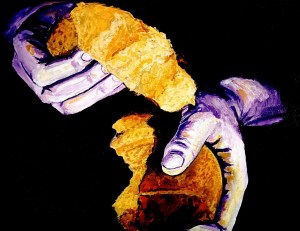
“So, I’m getting out tomorrow… and, well, I think I’d like to stay connected, or, you know, kinda figure I need to stay with church and stuff… I dunno, do you have any advice or suggestions?” The guy sitting across from me in bleak, concrete interview room at the jail struggled to make eye contact, shifted around constantly. He had a cut over his eye and had limped noticeably as he walked into the room. He had been semi-regular in my bible studies over the last year or so. He rarely said much, but when he did it was measured and thoughtful. I told him I was happy to hear that he was getting out. He didn’t seem as happy for himself as I was for him.
I asked him if he had anywhere to go (“yes, to a relative’s place on the reserve”) and if there were any churches where he was going (“a gospel chapel, maybe?”). I suggested reaching out to someone where he was going to be living (“yeah, ok”), asked if he’d like me to do a bit of poking around online to see about options (“sure, that would be good”). I asked him if he ever came back to the city (“well, it all depends on if I can get a ride”). “If you’re ever in town,” I said, “I’d be glad to connect with you. And of course, you’d always be welcome at my church.” He looked up, smiled. “Really?” I nodded. Explained where we were located. Said he could come by any time. He smiled again. “That would be good.” We prayed, and he went back to his cell.
You’d always be welcome at my church. I’ve been thinking about this statement ever since my conversation in the jail. Do I believe this? Do I have a right to say this? Would the people in my congregation appreciate me throwing open the proverbial doors? I thought about what I know about some of the people who ask if they can look me up once they are released. Addictions, histories of violence, often highly unstable, emotionally volatile, unpredictable. Some have political and religious views that would fit, shall we say, a bit awkwardly with the general ethos of the community. I’ve had enough of these conversations to know that “I’ll look you up when I get out” rarely, if ever results in anyone actually showing up at church. But what if it did?
Churches — perhaps especially more, for lack of a better term, “progressive” churches — are quite fond of using the language of “welcome and inclusion.” My sense is that usually this welcome and inclusion implicitly has a very specific range and scope. We’re talking about the categories of race, gender, and sexual identity. We’re talking about doubters and skeptics. We’re talking about those exploring different paths on their spiritual journeys. We might be talking about socioeconomic standing (maybe). But are we talking about vaccine skeptics and conspiracy theorists and people obsessed with spiritual warfare? Are we talking about those who don’t sing from the same song sheet when it comes to race, gender, and sexual identity? Are we talking about the people who don’t share our views on Israel/Palestine or [insert radioactive political topic]? Are we talking about the ones who can’t sit still for more than five minutes? Are we talking about the angry and the addicted and offensive? Are we talking about the men and women who keep finding themselves in concrete rooms with plastic chairs, knowing that something has to change but not having a clue how that might happen?
I think very often we say things like “all are welcome” because we think it’s the kind of thing Jesus would say and the kind of thing that Jesus would want us to say. We can’t imagine Jesus turning anyone away. But if we’re honest, we don’t really mean “all.” We mostly mean, “We welcome all people that we believe it would reflect well on us for welcoming.” Truly extending a welcome to everyone could well be impossible. Or dangerous. Or irresponsible. Or… something. At the very least, it’s a lot more complicated than throwing a slogan or a sticker on the window or the website. And to be clear, I’m not exempting myself from any of the preceding analysis. This is just who we are and where we live.
Once I was finished meeting with the guy about to be released, I began to make my way through the unit to the exit. Suddenly, I heard another guy yelling my name. He came racing down the stairs and was out of breath by the time he arrived. He was quite a sight, hair everywhere, stains all over his shirt, teeth crumbling from years of drug abuse, his movements wild. “I made something for you,” he said. I looked down and saw him holding a ring he had made from beading. I guess I had told him that I liked his ring once in chapel. “I wanted to make sure it fits before I bring it this afternoon.” I felt a lump in my throat at this beautiful gesture. “Thank you,” I said. “This means more than you know.” He grinned, erratically.
Later in the day, he gave me the finished product. Shiny dark silver beads, four little blue and red crosses around the band. I thanked him again. I probably imagined we were having a bit more of a moment than we were. “Yeah, all good, man, are we watching that Jesus show or what?! Let’s go!” I went over to the DVD player, pushed play and sat off to the side, looking down every now and then at this incredible little gift. Whenever, I’ve looked down at my finger ever since I’ve said a little prayer for him. And I’ve prayed that should he ever show up in church, that I would extend the welcome of the One to whom those little crosses point, a welcome that that at least makes an attempt to reach across the many tired categories that divide us.
——
Image above taken from the 2022-23 Christian Seasons Calendar. It’s called “Broken for You,” and was created by Aaron Miller.
Discover more from Rumblings
Subscribe to get the latest posts sent to your email.


 Rumblings
When I was in Southern California a few years ago I went to a black Baptist church… the pastor asked if any wanted to come up and present prayer requests…. many came forward…one individual indicated they were in the adult porn business, and needed prayer. Another was addicted to drugs and needed prayer… and so on… I had never seen anything like that growing up in a MB Southern AB church. It felt raw…uncomfortable even. A friend of mine once told me that broken people NEED to be in a church where they have the opportunity to meet the great physician…he felt we needed to embrace these broken people….and maybe we also need to reflect on our own brokenness….I have never forgotten what he said….
Sounds like a wise friend. Yes, we all need the Great Physician.
o o f
You at your very best. Thank you.
Ryan, this is so good. And the crux of your fourth paragraph resonates deeply with me as a pastor. Thank you for sharing your process.
Thanks very kindly, Josh.