“What If We Also Crave Commandments?”
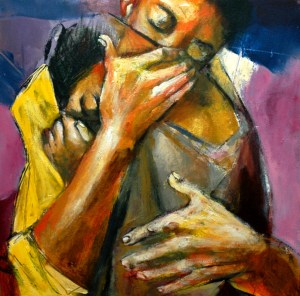
I’ve been thinking about moral “progress” a lot lately. The impetus for this has come from several sources. In Nick Cave’s latest edition of the Red Hand Files, he responds to a guy who’s wondering how to “move forward with joy” when one has “outgrown” the moral norms of one’s parents. Then there was a philosophical essay called “Moral Progress is Annoying,” which circled around the unremarkable insight that our “norm psychology” and knee-jerk reactions aren’t always reliable indicators of what is right or wrong.
In both cases, while it was never stated baldly, the assumption seemed to mostly be that moral progress was expected, possibly even inevitable. The views of the young are obviously superior to the old, the “progressive” was obviously preferable to the “conservative,” moral norms generally move in a good, healthy, and necessary direction. When this makes us uncomfortable or when perhaps a few questions come to mind, our job generally is to recognize that the problem is probably on the side of those looking backward instead of forward. Moral progress will, regrettably, feel annoying for those who take a while to get on board.
I’ve been holding all of this alongside my general observations of the world, whether it’s my conversations with young adults, my chaplaincy work in the jail, or my pastoral work in general. The general picture I get most days is that the world is pretty terrible. There is plenty of hand-wringing about the usual cluster of issues: climate change, social injustice (usually clustered around issues of race, sexuality, and gender), and the opioid crisis that is laying waste to so many communities. There’s the polarization of our politics and our discourse. And, of course, concerns about how the internet and social media are sending our world careening off a cliff.
Now, I want to preface what follows with the explicit caveat that I don’t think that the world really is as terrible as some describe it (and, it must be said, as some are highly motivated to portray it). I think that even though our moment does have profound challenges, even a cursory reading of human history would make us more circumspect with claims like, “things have never been so terrible.” I daresay few of us would be eager to swap our lives for, say, life in medieval Europe or ancient Rome, particularly if we would locate ourselves as minorities in any of the aforementioned categories of race, sexuality, or gender.
But there is a bit of a dissonance, isn’t there? Moral progress is unambiguously unidirectional and the recalcitrant should just suck it up and get on board. So, we say. And the world is uniquely terrible. So, we also say. In a weird way, we seem to want to simultaneously claim that our current views represent the pinnacle of human moral development thus far and the world in which these moral views have taken or are haltingly taking root in is uniquely terrible. Would not a morally progressive and enlightened world produce a world that was generally decent and tolerable to live in?
Perhaps it’s just going to take more time. Perhaps the knuckle-dragging conservatives just need to stop pumping the brakes on the moral progress train. Some certainly believe this. It must be said that this fits awkwardly with realities like the one Nicholas Kristof describes in a recent New York Times article, where progressive cities—in this case on the USA’s west coast—tend to be a mess, “plagued by plagued by homelessness, crime and dysfunction.” It must be acknowledged that cities in more conservative parts of the country aren’t exactly hitting it out of the park either. But at the very least these kinds of unpleasant scenarios ought to make us suspicious of straightforward narratives of moral progress.
A few people have recently asked me if I think my theology has changed over the last few decades. Do you ever go back and read your old sermons, some have asked? Do you still think/preach the way that you used to? I don’t tend to enjoy reading my old sermons (or blog posts), but when I summon the courage to do so, I generally don’t find a lot that I radically disagree with. I would certainly say some things differently now than I did then, I might change the emphasis here or there, but I have yet to find a sermon where I think, “well, that was pure nonsense! I don’t even believe that anymore!”
If I were to point to one subtle difference, though, I think it would be that my Christology has gotten higher, and my anthropology has gotten lower. I think more of Jesus and what he has done for the salvation of the world. And I think less of human beings (myself included). This is no doubt at least in part because so much of what masquerades as moral progress these days is resolutely centred on the subjective self instead of on God or any kind of transcendent reality that might make bless and honour, certainly, but also make demands upon the self. And from Genesis 3 onward, self in place of God has always been a truly terrible idea.
Well, speaking of young adults, suspicions about moral progress, narratives centred on the self, the lamentable state of the world, and a God who might higher than our selves, I recently came across a remarkable piece by a young woman named Freya India called “Our New Religion Isn’t Enough.” Officially, she’s critiquing the “self-care” movement, but she’s doing an awful lot more. I want to give her the last word. It’s a longer quote, but it’s well worth reading (and perhaps reading again):
It’s hard to put this into words but I think, in some ways, what we actually want is to be humbled. People say Gen Z follow these new faiths because we crave belonging and connection, but what if we also crave commandments? What if we are desperate to be delivered from something? To be at the mercy of something? I think we underestimate how hard it is for young people today to feel their way through life without moral guardrails and guidance, to follow the whims and wishes of our ego and be affirmed by adults every step of the way. I’m not sure that’s actual freedom. And if it is, I’m not sure freedom is what any of us actually wants.
Because look: our mental health is collapsing. Self-harm and suicide rates are on the rise. We feel lonelier than ever; we feel hopeless about the future. Despite the wellness industry being worth trillions now, despite the constant mental health campaigns, despite the relentless raising of awareness, none of it makes a dent. If anything we feel worse. And what’s telling is that the decline in mental health is worse for the least religious, which now happen to be girls and young women. Plenty of research shows that religious people are happier, more connected, and better protected from the pressures of modern life.
So maybe we can replace some aspects of religion. We can find community without church. We can be absolved from guilt and shame in therapy. We can find peace and calm by putting our faith in the universe. But what seems very difficult to replicate are the demands on the self. Not just a sense of continuity with the past, but a sense of obligation to the past—to honour our ancestors, to do right by our future offspring. Religion is not just reckoning with God and with the world, but reckoning with yourself. Not your needs and feelings but all the ways you fall short and fail to put others first. It’s a life devoted not to feeling better but being better; not to better thoughts but better actions. Instead we fear nobody. We need ask no forgiveness. But what if that’s what we need most? Less of a reckoning with childhood trauma, less with social injustice, and more with ourselves?
Maybe, just maybe, genuine moral progress will involve a bit of regression.
——
Image source.
Discover more from Rumblings
Subscribe to get the latest posts sent to your email.


 Rumblings