Skip to content

Posts from the ‘Quotes’ Category

What We Do With Our Unrest

In conversations about religion in Canada these days, one frequently comes across some variation of the phrase, “I’m spiritual, but not religious.” The implication often seems to be that “spirituality” represents openness, inclusivity, tolerance, and a host of other virtues, while “religion” is associated with the nasty dogmatism and rigid moralism of institutional church structures. Spirituality = good; religion = bad.  That seems to about cover it, in many estimations. Read more

Just Another Flower

My wife received a lovely bouquet of flowers from a co-worker today, and they were sitting on our living room coffee table when the kids arrived home from school. I sat down on the chair nearby and set to work returning a few emails when my daughter caught sight of the flowers and came racing excitedly across the room.

“Wow,” she exclaimed, after inspecting them for a few seconds. “Isn’t it amazing how God made these?” Read more

In Search of Worship

One of the highlights of any trip back to Regent College is the opportunity to snoop around their excellent bookstore. It’s always difficult to avoid spending much more money than I have, but I often emerge with a handful of good books to keep me going for a while. This year, one of titles I came away with was Orthodox theologian Alexander Schmemann’s For the Life of the World. Read more

The Servant God

The conversation taking place on my previous post—specifically the comment referring to open theism—has got me thinking about some of my writing and reflection I did on the topic during my university days. I spent an entire undergraduate thesis under the supervision of a self-described “atheistic Jew who is angry with God” advocating open theism as a response to the problem of evil. Read more

How God Gets What God Wants

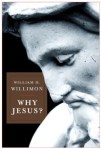
An interesting quote for Good Friday, from William Willimon’s Why Jesus?:

[T]he cross is not what God demands of Jesus for our sin but rather what Jesus got for bringing the love of God so close to sinners like us.  This is all validated by God raising this crucified victim from the dead, not by dramatically rescuing Jesus’ failed messianic project, nor certifying that Jesus had, at last, paid the divine price for our sin.  Rather, it showed the world who God really is and how God gets what God wants.

Witness to Surprise

My previous post was, perhaps, a bit long on what I don’t (or didn’t) like about the word “pastor” and short on what is good and positive and substantive about the vocation.  Chalk it up to my incorrigible “glass-half-empty” perspective :).  Or something like that.  At any rate, my estimation of the pastoral vocation has been on a long and steady trajectory of rehabilitation, not least due to my encountering of inspiring examples of what it can and should be along the way.   One of them, Frederick Buechner, captures much of what I was trying to convey in my post—both the potential pitfalls inherent to the position as well as the wonderful opportunities and privileges that can be part of a life with and for God and others—in this passage from Telling Secrets: Read more

On Justice

Every Wednesday in my neck of the woods, a handful of guys get together to talk and pray about God, life, work, marriage, and whatever else happens to come up before breakfast. One member of our group is a lawyer, and today we got on to the topic of justice and the irregular and inconsistent nature of its application in the Canadian system. To cite just one example (among a handful we talked about), there were back to back court cases where hunting an animal out of season resulted in a (much) more severe punishment than a clear cut case of spousal abuse. Amazing. Read more

Death is an Affront

Today was an interesting day, characterized by a number of rewarding yet demanding conversations with passionate and intelligent people wrestling with some of the deepest and most painful questions of life.  Among these questions, was the question of death—how we are to understand it, certainly, but, more importantly, how we are to live with and despite it, especially when faced with the loss of someone close to us.  Words often seem like meagre tools indeed when faced with the monstrosity of death, but as I sit in a quiet house ushering another day out the door, reflecting upon what it held, and snooping around in some old books, these words about death from Peter Berger hit home: Read more

A Relentless Divine Reach

In light of what’s going on in Japan, the theological controversies dominating the headlines these days can seem fairly trivial (to put it mildly), but I did want to post an intriguing quote from William Willimon’s Why Jesus? I’m not terribly interested in the question of whether or not Rob Bell believes in a hot (or long) enough hell to satisfy the demands of this or that understanding of orthodoxy, but I am, and have always been, very interested in (and dependent upon) the “relentless divine reach” of Jesus: Read more

“We Are Asking God to be God”

Each week at our Sunday services, before the children are dismissed, we take time to recite the Lord’s Prayer together. As with anything that is done repeatedly over long periods of time, if we are inattentive it can come to seem mechanical and tedious. Rather than being a vehicle for shaping and inspring us as Christ’s followers, it can come to seem like little more than part of the furniture. Frederick Buechner reminds us why we ought not to allow this to happen: Read more

The Work of the Church

I spent a bit of time this morning listening to an interesting little interview with Eugene Peterson over at NPR’s “Books” page. The interview accompanies a short excerpt from Peterson’s new book, The Pastor: A Memoira book that is in the mail, and that I am very much looking forward to. Unfortunately, Eugene Peterson wasn’t on campus much during the three years I spent at Regent College so I did not have the privilege of taking a course with him, but his books have been a lifeline to me over the course of my first three years in pastoral ministry (I’m thinking specifically of Under the Unpredictable Plant, Working the Angles, and Five Smooth Stones for Pastoral Work). Peterson’s consistent refusal to allow the pastoral vocation to be accommodated to the logic and demands of the marketplace (I believe “religious shopkeepers” is the term he uses) is an inspiration and a challenge. Read more

People of Joy

Around here, the first Sunday of each month is when we celebrate the Lord’s Supper. As is always the case, tomorrow’s service will take place in the context of real lives affected by loss, uncertainty, pain, and misfortune. But we will be reminded again tomorrow that the brokenness of our lives and our world is never the whole story. In my preparatory reading this week, I came across this passage from Gordon Smith’s A Holy Meal that reminds us that in the midst, the Eucharist establishes us as people of joy: Read more

On Rob Bell and Reading the Bible

While I am increasingly growing bored, annoyed, alarmed, and bemused by the furor around Rob Bell’s new book and the universalism it may or may not betray, I did want to pass along an excellent post that a friend sent me this  morning. I think that Jason Boyett is identifying a very important point about the nature of Scripture and how it relates to the theological positions we hold, whatever they might be: Read more

Fear Wins?

Today was an odd day in the blogosphere. It seemed like every third post that came through the reader had something to say, or linked to someone else who had something to say, about Rob Bell’s forthcoming book Love Wins, and whether or not Bell has placed himself beyond the pale by declaring himself to be a universalist (you can start here, if you like, and follow the link trails). Like nearly everyone else offering commentary on this book, I have not read it. The main reason for this is because the book hasn’t been released yet, which makes the hysteria around what it might say even more grimly amusing. It’s interesting to observe how threatening some people find even the possibility that Bell might not believe in a very specific conception of hell. Read more

Evil Will Have Nothing to Say

Two of my projects this week have been working on an article on suffering and the sovereignty of God, and preparing a class for this Sunday on the varieties of approaches to the problem of evil. Consequently, I’ve been raiding the bookshelf over the last few weeks in order to reacquaint myself with some of the authors and ideas that I leaned on more heavily during my university and grad school days. Read more

Be Particular

This morning, I began teaching a kind of “Apologetics 101” mini-course at church. On the agenda today was the question of how it is possible to believe that Jesus is the way, truth, and life when there are so many other religious options out there. In other words, how do we affirm one perspective as true in a pluralistic context? Perhaps more importantly, how do we do so in an intelligent, curious, and sensitive manner that does not alienate and annoy people unnecessarily? It was a thoroughly enjoyable and thought-provoking class. Read more

Compensation and Promise

From the “interesting things I’ve come across over the last week or so but haven’t had time to post about” file, comes Vancouver Sun religion columnist Douglas Todd’s latest piece on the increasing polarization of religion in Canada. The sociological data is in, and apparently we Canadians (and West Coasters, in particular) are increasingly abandoning the “ambivalent middle” when it comes to questions of faith. Whether it’s the existence of God or the nature of religious observance, we’re either really for it or really against it. Read more

If Functional… Well, What?

I’ve been reading books/articles related to science, faith, and philosophy over the last few weeks as I finished off an article on the (increasingly not so) new atheism for Direction Journal. One article I came across this week was Jesse Bering’s “Are You There God?  It’s Me, Brain” over at Slate. The article is not terribly original or new in the approach it takes—the basic idea is that our evolved psychological capacity to imaginatively reconstruct the mental states of others is thought to lead to the conclusion that our idea of God is just the biggest and most elaborate version of this process—but I think it provides an opportunity to identify a common error in discussions around this topic: the idea that if this or that feature of human thought and behaviour can be shown to have been evolutionarily useful at some point in human development, it is therefore explained without remainder by its function. I believe it was Holmes Rolston III who called this the “if functional, false” fallacy. Read more