Hooked on a Feeling
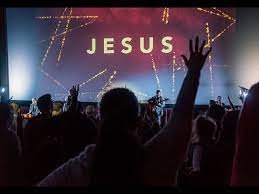
When I was (much) younger, I played bass guitar in a worship band. We would play in churches, camps, youth events, etc. The band was ok even if the bass player was terrible. One of my enduring memories of that period of my life was the emotional intensity of some of the worship gatherings we participated in. There were hands raised, eyes closed, impassioned prayer, occasionally even tears. There was often an enterprising youth pastor-ish kind of speaker who would ride the wave of feelings produced or enhanced by the music (some of which, it must be said, and which I thought even at the time, was rather lyrically vapid and theologically suspect). If I’m honest, even though I had a few reservations even then, it felt kinda good to look out and see the effect that our music was having upon people! Clearly God was present. Undeniably, the Spirit was at work! We were just humble vessels.
I would never have had this kind of language for it back then, but I was implicitly quite heavily invested in what Richard Beck has called the “sacrament of affectivity.” Once upon a time, Beck said, Christians believed that God was encountered in physical things, objects, rituals, spaces, places. Grace was mediated through the Eucharist, primarily, but also through the whole vast world of relics and cathedrals and icons and pilgrimages. You went to specific places and did specific things to connect with God. You ate the bread and drank the wine and in so doing grace was mediated.
The Protestant Reformation obviously kicked in motion a movement that would eventually reject much of this view of God and the world. Increasingly, God was not to be encountered in things, but in the subjective experience of faith. The Eucharist, for example was not where God was to be literally encountered physically, but was more symbolic in nature. Beck describes the shift thus:
Consequently, grace became mediated subjectively and psychologically via the faith of the believer as they approached the bread and wine. The sacrament here shifts from an objective, material encounter to an internalized psychological state. Thrown out of the material world and into our minds, grace becomes private, invisible, and subjective.
In such a situation grace is now mediated, not materially, but subjectively, and mainly affectively. We encounter grace through our emotions. This is what I mean by the “sacrament of affectivity.” Divine encounter is now a feeling. You encounter God when you “feel it.”
If God is primarily encountered in one’s subjective feelings, it becomes ever more important to create said feelings. So, in place of the whole sacramental world described above (relics, cathedrals, etc.) we have things like worship bands, altar calls, inspiring testimonies, etc. This is the world I grew up in. How else do you know if God is present than if people are having powerful emotional experiences? If they feel “touched” or “moved” or “led” to this or that expression of emotional affectation?
This is also a world where, as Beck points out in his piece, the preacher has to carry a fairly heavy load:
Why are evangelicals so addicted to electrifying, dynamic preachers? The homilies in sacramental traditions, by contrast, are pretty boring and bland. Why? Because grace isn’t mediated through the sermon. Grace is encountered in the Eucharist, and I’ve come to church for that material encounter. Consequently, the homilies in sacramental traditions don’t have to make you feel anything because grace isn’t mediated affectively, grace is mediated materially at the Table.
In evangelical spaces, by contrast, where grace is mediated affectively, the preacher has to make you “feel it,” has to emotionally move you. Most Sundays in evangelical spaces there isn’t going to be a celebration of the Eucharist. There will be no material encounter with grace. You go to church, therefore, not to meet something but to feel something. And it’s the preacher’s job to make you feel it. Consequently, the sacrament of affectivity drives demand in evangelical churches for charismatic communicators, speakers who make you “feel something.”
I can’t count how many times I have heard churchgoers evaluate their experience of a worship service based on whether the speaker was “dynamic” or not. The music is important, certainly, perhaps even more important for many. But the speaker must be able to hold the attention, be exciting, enthusiastic, passionate, etc. If the preacher was no good, then what was the point, really? Should have stayed home and found something on YouTube!
As one who preaches regularly, I can say that this is obviously a lot of pressure. What about the Sundays when you’re not feeling it? When the stresses of the week are weighing heavier than usual? When you’ve just had to navigate a challenging conversation a few minutes before the service? When you didn’t have time to write the most inspiring sermon ever? When you did have the time but just couldn’t find the words? What about when you’re not sure you have it in you to make anyone feel much of anything? Or that you want to?
The path from low church to high church is a fairly well worn one these days. Many evangelicals are getting weary of the, for lack of a better word, “production.” Some refer to the emotional manipulation of churches constantly trying to get them to feel something. Many low churches are dabbling with high church practices like more regular observance of the Lord’s Supper, Ash Wednesday services, greater attention to aesthetics in worship spaces, following the Christian calendar, etc. I understand this movement. It’s a movement I have made myself, to varying degrees, over the last few decades. I would never want to say that feelings are irrelevant or disconnected from one’s experience of God. But they certainly aren’t everything either. There are times where I long to just shut my mouth and point people to the bread and the wine.
I have very little confidence in my ability to make people feel something on a Sunday morning. I am too suspicious of feelings, including my own, to take them as a reliable barometer for God’s presence or activity. And increasingly, it feels like a fool’s errand to even play the game. Those who are chasing a feeling will always be able to find another church, another more dynamic speaker, another internet phenomenon, another amazing worship band, if not down the road, then certainly down the ether. I am increasingly more interested in the older sacraments than the sacrament of affectivity. I want to encounter a God who doesn’t need my feelings to ratify his presence or power.
Discover more from Rumblings
Subscribe to get the latest posts sent to your email.


 Rumblings
Barth, Bonhoeffer, Van Ruler, and other theologians have been suspicious of pietism.
I wonder if this is your calling. If this is what you are meant to ponder and articulate. To help bridge the gap between, “low” and “high” church. To help create a new ministry of everyday people, in ordinary and everyday spaces, encountering Christ through a sharing in the ancient sacraments and mysteries.
Jesus always lived and lives beyond the boundaries of our religious institutions. Where we are, He is. If we look for Him, we will find Him. If we acknowledge His presence, He is there.
Imagine if every family began it’s day with a Eucharistic celebration…
I’m going to believe that this post is a “word” for me, from God, through you…I’ll pray about it.
Thank you.
I’ve always had a, “soft spot” for bass players.