Be (More Than) Kind
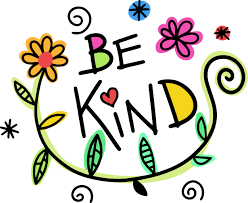
My wife and I were recently out walking and passed by a woman wearing a buoyantly colourful T-shirt full of flowers and virtue that said, “Be kind” on it. I did my best to smile inoffensively at her as she walked by. I probably failed. Once she was out of earshot, I said to my wife, “What do you think shirts with messages like that actually accomplish? “Do you think people look at them and think, ‘Ah, yes, thank you for the reminder. I shall redouble my efforts to be a kinder person today’? Or do you think people resent the mini-moral lecture and mutter derision at them under their breath?” My wife may have rolled her eyes at me. Or muttered derision under her breath.
These sorts of T-shirts are, of course, a dime a dozen these days. “Kindness” messaging is ubiquitous, from T-shirts to home décor to entire brands of skin care products. I’m not on social media, but I can well imagine that certain types of feeds are awash with kindness exhortations. In a world where everyone seems to be angry with everyone else all the time, a world where political and ideological polarization is kind of our assumed default, where it seems like we are (self-righteously) shouting our opinions at each other constantly, we seem to imagine that “Be kind” is the salve for our cultural wound.
There are a few problems with no doubt well-intentioned “be kind” messaging. The first is rather obvious. Few people enjoy being told what to be or to do by other people. We find this difficult enough when the source is someone who knows us or even loves us, much less when it comes from a stranger walking down the street. “How do you know I’m not already kind?” might be one question that pops to mind. Or “What do you mean by ‘kind?’” Or “Is it kind to tell strangers what they should be or do without knowing anything about them?” Or “Is putting moral messages on your t-shirt really just a kind of virtue-signalling? A pre-emptive claiming of the moral high ground in a cultural context where vapid moral messaging is ubiquitous?” Oh dear. I can almost feel my wife’s eyes rolling at me from afar.
Also, we might wonder how effective kindness messaging actually is. My kids went through a public school system awash with “be kind” exhortations on bulletin boards and in emails and assemblies and newsletters and who knows what else. They did not experience any school they attended to be particularly kind places. I sense that not much has changed in the intervening half-decade or so. Parents with younger children regularly tell me about the bullying that remains ubiquitous. This morning, I read an appalling story about a thirteen-year-old girl in British Columbia who was beaten unconscious by a horde of teenagers on a beach (teenagers who have presumably had ten more years of “be kind” drilled into them than my own). Kindness messaging is everywhere, and kids are, frankly, as unkind as they have ever been. Perhaps even more unkind, given the ugly realities of social media and how this operates on brains-in-formation. One might conclude from the above that human nature is a stubborn and recalcitrant beast and that we are in need of more robust moral categories than limp bureaucratic appeals to “be kind.”
Well, speaking of school systems and human nature. Tim DeRoche evidently found himself recently thinking along similar lines in a piece called “The Cult of Kindness.” DeRoche seems to be something of an uneasy Roman Catholic who has found/is finding his way back to the church by way of his children’s education at a Catholic school. Public schools told his kids to “be kind.” Catholic school told them to be virtuous. Public school tried to convince them that it was “cool” to be kind, to subsume ethics under social approval. Catholic school said that sometimes it’s not cool to do what is right but that we should do it anyway. Public schools assumed that his kids were basically good and just needed a bit of moral encouragement. Catholic school told them that they were dearly loved sinners who needed to confess their sins. DeRoche found himself preferring the latter to the former in every case.
DeRoche (correctly, in my view) diagnoses our cultural moment and why we’ve landed on “be kind” instead of something far more robust and potentially effective:
I think what’s going on here is that we’ve become very uneasy about using the moral categories of the past. “Kindness” and its cousin “tolerance” are the only values that seem consistent with our current age of agnostic pluralism. We’ve also been trained to defer to an individual’s preferences, and it seems wrong to pass judgment on another person’s choices (unless, of course, they’re being “unkind”)…
What I’m starting to realise, though, is that we need to revive the concept of Virtue if we’re going to talk clearly and accurately about morality. Pluralism itself, instead of undermining the case, demands that revival. In our effort to be culturally sensitive, we’ve purged our moral conversation of concepts that occur again and again across all the wisdom traditions of our species. We’ve created an alien life form in a petri dish, and we’ve unleashed it on our children.
If DeRoche hasn’t made enough people squirm by this point in his article, he ends with a discussion of sin. He (again, correctly in my view) says that we can’t properly understand who we are or what we might aspire to without some conception of sin. He tells the story of awkwardly helping his daughter through the process of confession (a process he admits he wasn’t entirely comfortable with at the time). There were tears and confusion. There was also something of an epiphany:
The whole incident had opened my eyes. Isn’t this the danger for all of us? That our shame will prevent us from looking at our sins squarely? I was grateful for this ritual, this sacrament, that helped my daughter confront—and accept—her own shortcomings. She will often now tell me cheerfully, unprompted, that she did something that needs to be confessed.
Later that year, I went through the same process when I confessed over 20 years of sins to my priest. My life was quite rocky in the years before I met my wife, and I had been through years of therapy and confronted lots of my own “unhealthy” and “unproductive” behaviours. But now I had to be honest and clear that decades of difficulties had often been the product of my sins.
As I’ve said before, we live in a very complicated cultural moment, one where we have never been more (confusedly) self-righteous, where we are coasting on the fumes of an unacknowledged and unappreciated Christian ethic, but where we are also desperate to rid ourselves of the very categories that might render ourselves morally intelligible to ourselves. And so we stumble around the post-Christian wasteland flimsily telling each other to “be kind” without bothering to ask why or when or how or if there might ever be a situation where kindness might not be enough. We need more—far more—than kindness. We need to pursue the good, the true, and the beautiful. We need to articulate and aspire to actual virtue. For God’s sake, and for our own.
Discover more from Rumblings
Subscribe to get the latest posts sent to your email.


 Rumblings