Thursday Miscellany (On Human Nature)

There’s a passage in Elizabeth Strout’s most recent novel The Things We Never Say where Artie Dam, a middle-aged, mildly despondent middle-aged high school history teacher who has endured personal tragedy and has recently been musing about whether or not human beings have free will or not, decides to take his eleventh grade students on a tour of some of history’s more recent atrocities. He talks about the American and Spanish Civil Wars, about Mussolini and the rise of fascism, about World War 1, about Hitler, about Jews being hauled off on trains to the death camps. The students are, for once, transfixed, hanging on his every word.
As Artie’s tour of relatively recent human wickedness reaches it conclusion, one student raises her hand to ask a question. “Do you think there is any chance for world peace?” All the students wait, expectantly, for Artie’s response. He takes a deep breath, smiles, and says, “Yes, I do. Eventually we will get it figured out.” He concludes the class with a stirring summons to the students. The future belongs to you. Take the responsibility seriously. Make the world a better place.
When the final student has left his classroom, Artie is left alone with his thoughts.
Artie felt a lingering sense of shame: He had lied to his students. They could not bring about world peace. No one could.
Later that night, Artie relays the story and his shame to his wife Evie. “Oh for God’s sake,” she says. “Of course you should lie to them. what are you supposed to do, leave them without any hope at all?”
///
 We’re a few days removed from the US midterm elections. There is still a buzz of euphoria in the air, for many. The moral rot and corruption, the shameless dishonesty and careless cruelty, to say nothing of the gross political miscalculations of Trump—all of it was finally, decisively rejected. It was a victory for goodness and decency and compassion and diversity and tolerance and civility all the other things. Hooray for the good guys winning and the bad guy(s) losing.
I had to pause, though, as I read another election post-mortem in The New York Times this morning. A few unremarkable lines caught my eye:
Democrats mostly ignored the daily Trump distractions and sought to connect corruption to costs. They also told a story of a government focused on elites while average people struggled.
My memory isn’t flawless, but I seem to recall pretty much identical language being used a decade ago when Trump was first rising to power. Inexplicably, he positioned himself as the candidate for the “average people.” He was going to “drain the swamp,” stick it to “the elites,” fight back against government corruption, lower costs for regular people. The narrative was eerily similar. You could pretty much swap the words “Democrats” for “Republicans” a decade ago and the story would be the same.
I’m not drawing a moral equivalence between Donald Trump and other political leaders. He is, in many ways, a category unto himself. But there is probably a lesson in here about human nature. And it’s a very old one. Power can and very often does corrupt. It corrupts Republicans and it corrupts Democrats and it corrupts people who don’t like either of those words.
I don’t know who will be in political power in 2036, but I’m willing to bet that whoever’s trying to pry it out of their hands will be talking about sticking it to the elites while the average people struggle.
///
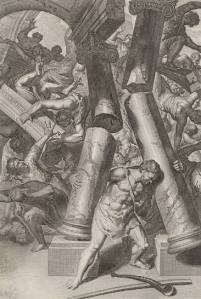 My preparations for a few group discussions at church over the last few weeks have me spending time in the OT book of Judges. It’s pretty grim reading, obviously. Plenty of corruption and violence and idolatry. Like pretty much all of human history. I couldn’t help but think of the flip-flopping revenge politics of our polarized political moment when I read one introduction to the book of Judges:
The stories are arranged so that good examples of leadership (Othniel, Deborah, Jepthah) alternate with not-so-good examples of leadership (Ehud, Gideon, Samson) with the whole book centering on Abimelech’s abortive reign at Shechem.
Good judge, bad judge, good judge, bad judge. An eventual catastrophe. Rinse and repeat. Later, this pattern will be reproduced with Israel’s kings. Actually, it will be way worse. More like, bad king, bad king, bad king, bad king, good king, a whole bunch more bad kings…
The time of the Judges was a time when “everyone did what seemed right in their own eyes.” The results, then and now, were and are catastrophic.
///
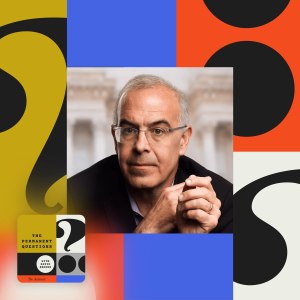 David Brooks has a new podcast called “The Permanent Questions.” In the most recent episode, human nature was the subject of the conversation. Or, the subject underneath the subject of the conversation. Brooks and fellow Yale scholar Samuel Moyn were ostensibly talking about whether sustainable political change should come slowly and incrementally or in a more radical, burn-it-all-to-the-ground French Revolution type movement. On that question, Brooks favours the former, Moyn the latter. But they were really talking about human nature, about what’s possible for creatures like us, about what constraints we operate under, and about how we should order our societies to account for this.
Brooks believes that all human beings are sinful by nature. Every political arrangement must take into account things like human selfishness, love of power, greed, etc. Moyn has a more optimistic view, believing that a belief in human sinfulness limits possibilities, pumps the brakes on progress. For Brooks, human nature is malleable, but only to a point due to sin. For Moyn, human nature is more like a blank slate, an open book, a catalogue of possibilities.
It will not surprise many to learn that I am squarely with Brooks on this one. Because, well, history. Good judge, bad judge. Good king, bad king. Good party, bad party. Rinse and repeat. Wherever human beings go, there we are, ruining and reclaiming, tearing things to the ground and building them up, condemning and praising, lamenting and exulting, wounding and healing. This need not lead to resignation, necessarily. It should, however, lead to a more clear-eyed approach to politics, to history, to our fellow human beings.
I think that genuine moral progress is possible, although it is by no means inevitable. I think history bears this out and I have seen it with my own eyes. I also think that genuine moral regress is possible, although it is by no means inevitable. I think history bears this out and I have seen it with my own eyes. Good judge, bad judge… you know.
As Artie sighed in his high school classroom, we cannot ultimately bring about world peace. Only One can.
Discover more from Rumblings
Subscribe to get the latest posts sent to your email.


This post made me think of The Hunger Games. Katniss realizes that overthrowing one ruler doesn’t necessarily break the machinery of power—it can simply put someone new in charge. Her final choice matters because she refuses to let the cycle reset in quite the same way.
Maybe that’s the lesson here, too: corruption isn’t confined to one party or one kind of leader; it’s a temptation built into power itself.
The hope is that we recognize the cycle—and keep resisting its return.