Castles of Regret
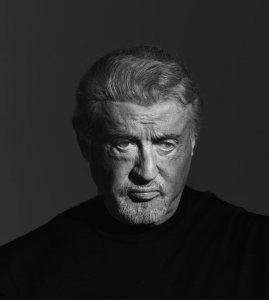
My Saturday morning coffee was spent reading an interview with Sylvester Stallone. I’m not sure why, exactly. I’ve never been a huge Stallone fan—his brand of American machismo never really connected with me. He seemed all brawn, no brains. Even if part of my younger self was drawn to the violence of his films, I sort of suspected that it wasn’t the sort of thing that I should be drawn to. It was probably the headline of the article that grabbed me (as good headlines are supposed to do). It spoke of “struggles” and “coming clean.” I suppose I’m always interested in how people make their way in this world and how they think about their lives now that they’re closer to the finish line than the starting blocks.
Unsurprisingly, Sly’s story is a bit more complicated and sad and interesting than the muscly American bravado I associated him with. His childhood was horrible in all kinds of ways. Neither of his parents seemed to want him and both abused him in all kinds of ways. Forceps were improperly used at his birth which led to the partial facial paralysis that came to define his speech. It takes little imagination to envision the countless ways this would make a difficult childhood even more brutal. His whole life from that point forward seems to have been spent trying to prove that he was worthy of a love that his parents never gave him. To prove that he could make something of himself. To prove that he mattered.
And then, when he did make it—his Rocky and Rambo films obviously sent him into the stratosphere of superstardom—he became insufferable. Utterly lacking in humility, combative, vengeful, petty. He alienated all kinds of people. He was a lousy parent. He punished his body in all kinds of ways to keep his “armour” in place. Years later, he would say he despised himself. “It was,” he said, “a measly manner of existence.”
At one point, the interviewer is talking with Stallone about a conversation he had with mother. Sly asks his mom if she thinks she’s ever done anything wrong, if she has any regrets. She says no, which astonished him:
Wow. I live on regrets. I can make a castle out of regrets.
Later, Sly is asked to expand upon this comment:
It’s horrible. It’s the fog of war, the war of trying to succeed, and you can blame it on that or on petty self-absorption, and wow it is painful. But yesterday is dead. Do you forgive yourself for being a bastard? No, you just regret.
I read these lines and felt a deep sadness for Stallone. Here he is, eighty years old, having achieved everything most people think they want in life, and struggling to move past the self-loathing and regret. He’s hardly alone, of course. So many are prisoners to their pasts, trapped by what was done to them, what they did to others and themselves. To be a pastor and a chaplain is to get a front-row seat to all of this. To be a person is to at times struggle with it yourself. We can all build castles out of regret.
I recently encountered someone who is walking/has walked away from Christian faith. Too many unpleasant doctrines, too much weird Bible content that can’t be harmonized, too much awkward specificity. A more generic god, a god “of your own choosing” could be tolerated, perhaps. But not the Christian version. These stories abound, of course. I’ve encountered plenty over the years. I am usually sympathetic to parts of what causes people to walk away. There are very few doubts that are unfamiliar to me.
But I usually end up circling back to forgiveness, this most powerful of Christian truths. This deep hope that what we have done (or failed to do) can be healed, redeemed, forgiven. That there is mercy for weary souls. That regret doesn’t need to be the final word, that it doesn’t need to hold us captive. That ugliness can be turned to beauty. That our stories take place on a longer arc and a more wondrous tapestry than we can see at any given moment. That, in the end, Christ knows what to do with our castles of regret. I don’t trust a generic god or a “god of my choosing” (what a useless deity that would turn out to be!) with that kind of task. Only Jesus will do. To whom else would I go for what I need the most?
Sylvester Stallone is eighty years old. At one point he remarked that he could “see the light at the end of the tunnel.” The interviewer ends with a question about death. How does he feel about it now that it’s looming larger?
In panic mode. Because of what I said before: I built a castle with thousands of stones made of regrets. I’m trying to make up for it in my own petty way, and I don’t know if there’s enough time. There is not enough time.
What I would want to say to Sly is that he’s both right and wrong. He’s right, we can’t make up for all the regret on our own. There is never enough time for that. But he’s wrong in this important sense. Forgiveness is a gift offered by the risen Christ. Our castles of regret can be washed away in the waves of his mercy. Freedom from ourselves and our pasts is not, in the end, an achievement, but the acceptance of what has been done on our behalf. And as long as we draw breath, there is enough time to receive it.
Discover more from Rumblings
Subscribe to get the latest posts sent to your email.


I recently composed an instrumental piece on guitar. I call it, “Regret( a haunting). It’s a simple piece but it’s honest, no ego in it as far as I can tell. I like it. Happy with it, really. Saying what I mean to say without the vanity and self centeredness words so often produce.
My experience with regret at 70 (almost) is a mostly healthy process. What true confession is there, without regret and remorse? For me, it is as you say, “Christ knows what to do with our castles of regret”.
And your last line, just might be my favorite closing sentence of all the posts or responses, I’ve read here.
Thanks, Ryan.